
What Comes on a Döner Plate?
Döner in bread is a classic, but it is not the only way to eat a kebap. Sometimes you want the same mix of meat, vegetables, pickles and sauce with a little more room to move. That is where the döner plate comes in. Instead of packing everything into bread or wrapping it in yufka, every component gets its own space, making it easier to mix different flavours and textures with every bite.
At Kebap With Attitude, this format is called a Tray. It is the larger version of the kebap, served with a side and built around the same ingredients that give each recipe its own character. The important part is that there is no single formula for what a döner plate should look like. A Klassik Tray is very different from a Tschick, Vallah Vegan or Truffle Delüks, because each one is designed as its own combination rather than as the same base with a few ingredients changed.
CONTENTS
There Is No Standard Döner Plate
It Starts With the Kebap You Choose
A Döner Plate Does Not Have to Mean Meat
Then There Is Truffle Delüks
The Side Matters More Than You Think
Add Mezze to the Table
So, What Comes on a Döner Plate?
There Is No Standard Döner Plate
When people think about a döner plate, the first image is often fairly simple: meat, salad, sauce and some kind of side. That is one version, but there is much more room to play with the idea. A good plate is really about balance. You want something savoury at the centre, fresh vegetables around it, acidity from pickles or other sharper ingredients, a sauce that brings everything together and a side that makes sense with the rest of the kebap.
The Klassik is probably the easiest example to understand. It combines beef with lettuce, red cabbage, red onions, tomatoes, pickles and parsley, finished with garlic, herb or spicy sauce, or a combination of them. It stays relatively close to the familiar Berlin döner direction while giving the individual ingredients more space on the plate.
The Tschick goes in a different direction. Chicken is combined with lettuce, grilled vegetables, tomatoes, red onions, cucumber, feta, mint and lime. Garlic, herb and spicy sauces are available here as well. The structure is still recognisably kebap, but the grilled vegetables, feta, mint and lime create a completely different result from the Klassik. That difference is exactly why it does not make much sense to think of a döner plate as one fixed dish.

It Starts With the Kebap You Choose
The main ingredient naturally shapes the direction of the plate, but what surrounds it is just as important. The O.G. starts with beef and combines it with grilled pointed peppers, tomatoes, yogurt, parsley, butter, pickles and tomato sauce. The combination is richer and more focused on warm, savoury flavours, while the pickles and parsley keep some freshness in the mix.
With the Uncle O.G., you can choose beef or chicken. Fries, onions, tomatoes, pickles, parsley and garlic sauce complete the kebap. It is a simpler combination than some of the others on the menu, but that is also part of its character. The fries are not an afterthought here. They are part of the actual kebap combination and become the side when you choose it as a Tray.
If you want to go further into comfort food territory, there is Chilli Cheese. Braised beef is combined with marinated onions, pickles, spicy mayo, parsley, chilli and cheese sauce. As a Tray, it comes together with spiced fries. The richer beef and cheese sauce are balanced by the onions, pickles, chilli and parsley, so there is still enough contrast across the plate.
The Smoky BBQ gives you another direction again. You can choose beef, braised beef or chicken, combined with lettuce, coleslaw, roasted onions, roasted potatoes, red onions, pickles, sesame and Smoky BBQ sauce. It is a fuller, roasted combination where the potatoes and onions play just as much of a role as the meat.

What all of these have in common is that the plate is not simply a pile of döner meat with salad placed next to it. The ingredients around the main component are what give each Tray its identity.
A Döner Plate Does Not Have to Mean Meat
The same idea also works without beef or chicken. Vallah Vegan is built around planted. vegan meat and combines it with fried cauliflower, lettuce, pomegranate, onions, pink pickled radish, sesame, chilli and soy cacik sauce.
What makes the combination interesting is that it is not simply a Klassik with a meat substitute added in. The whole kebap is structured differently. Fried cauliflower brings texture, pomegranate adds a fresh and slightly sweet element, while pink pickled radish introduces acidity. Sesame and chilli add another layer before the soy cacik sauce pulls the ingredients together.

That is an important difference when it comes to plant based kebap. A vegan option does not need to copy the exact structure of a beef döner to work. It can have its own ingredients, its own balance and its own personality on the plate.
Then There Is Truffle Delüks
At the richer end of the menu sits Truffle Delüks. Beef is combined with green asparagus, roasted potatoes, lettuce, tomatoes, spring onions, pomegranate, freshly grated truffle, sesame and truffle mayo.
It is clearly a different interpretation of kebap, but the structure still makes sense. Beef gives the plate its savoury base, while asparagus, lettuce, tomatoes, spring onions and pomegranate bring freshness and contrast. Roasted potatoes add more substance, and the freshly grated truffle and truffle mayo take the whole thing in a richer direction.
This is also a good example of why the Tray format works so well for contemporary kebap. There is space for more ingredients and more contrast without having to squeeze everything into one piece of bread.

The Side Matters More Than You Think
A big part of choosing a döner plate is the side, and across the KWA menu that can mean rice, fries, spiced fries, potatoes or bread, depending on the kebap. The side changes the overall experience more than it might seem at first.
Rice gives ingredients and sauces a relatively neutral base and works well with combinations such as Klassik, Tschick and Vallah Vegan. Fries take things further into comfort food territory, which fits the Uncle O.G. Spiced fries make sense alongside the stronger flavours of Chilli Cheese, while potatoes naturally become part of the roasted character of Smoky BBQ and Truffle Delüks. With the O.G., bread remains part of the Tray combination.
The side is therefore not something added simply because there is more room on the plate. It is part of how the kebap is put together.
Add Mezze to the Table
A döner plate can easily stand on its own, but the mezze menu gives you another way to build the meal, especially when you are sharing. Mama Ganoush combines smoked aubergine purée with garlic, olive oil and parsley, while Homemade Tursu brings Turkish pickled vegetables with sumac and parsley.
For something with more texture, Mini Falafel comes with sweet tahini, pomegranate, mint and sesame. Zucchini Feta Fritters are homemade fried zucchini and feta nuggets served with garlic dip, while Cauli Tahini combines tahini with lightly spicy fried cauliflower, sesame, pomegranate, coriander pesto and garlic.
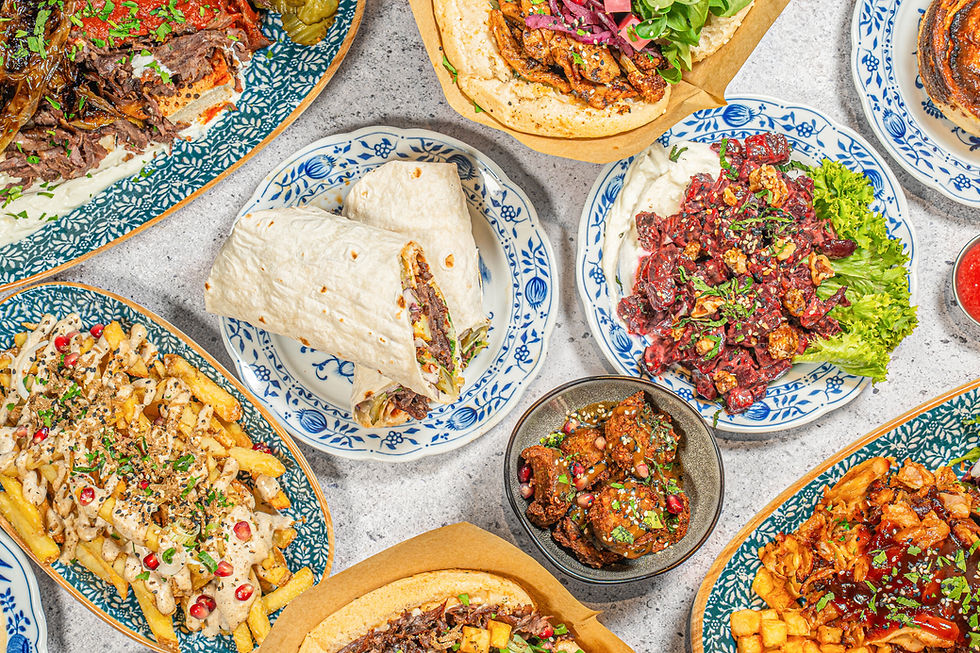
There is also Truffle Fries Delüks, made with fries, truffle mayo, parmesan, spring onions, pomegranate and freshly grated truffle. Whether you add one mezze or put several in the middle of the table really depends on how hungry everyone is and how serious the sharing plans actually are.
So, What Comes on a Döner Plate?
There is no single answer, and that is probably the most useful answer of all. A döner plate can stay close to the Klassik combination of beef, vegetables, pickles and sauce, or move towards chicken with grilled vegetables, feta and lime. It can be completely vegan with planted. vegan meat, fried cauliflower and soy cacik sauce, or go in a richer direction with beef, roasted potatoes and freshly grated truffle.
What matters is the balance between the different parts of the plate. The main ingredient gives it direction, vegetables and pickles bring freshness and acidity, sauces connect everything, and the side completes the combination.
Döner in bread is not going anywhere, and it should not. But when you want to experience all those ingredients with a little more space, a Tray makes a pretty good case for giving your kebap the whole plate.


Comments